Factorio Space Age Blueprints: Choose, Test & Organize
Factorio Space Age blueprints are most useful when they match the job you are trying to solve. A planet mall, elevated rail segment, space-platform layout and Nauvis starter block each need different checks. Use this guide to choose a book, verify its assumptions and test one copy before scaling it.
Updated September 6, 2026 for Factorio 2.0 and Space Age planning
Quick Answer: What Makes a Space Age Blueprint Useful?
A good Space Age blueprint is a repeatable solution with a clear input, output, footprint and version assumption. Import the smallest useful block first, inspect it, then run it with the same train length, planet conditions and logistics method used in the real base.
- Separate Nauvis, planet, elevated-rail, space-platform and mall blueprints instead of mixing every design into one book.
- Check Factorio version, Space Age dependency, quality settings, mods, train length, orientation and tileability before placing the blueprint.
- Test belts, inserters, pipes, power, signals, station limits and construction coverage in a sandbox or empty part of the map.
- Keep a small trusted book with labels and variants; a huge download is harder to debug when one dependency is missing.
Blueprints Connect Local Factories and Planetary Logistics
Space Age changes blueprint context. A design can work on one planet and fail when inputs arrive by rocket, platform or train. This is an editorial planning concept, not an official screenshot.
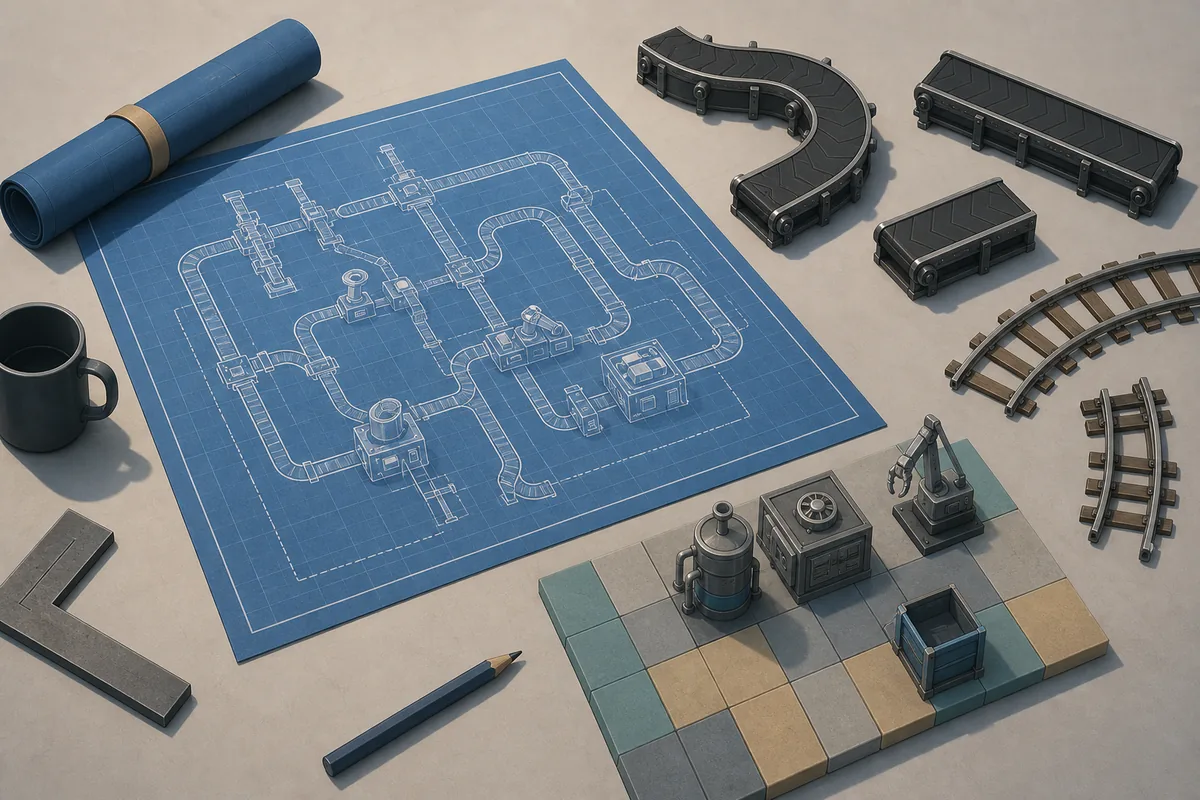
Factorio Space Age Blueprint Book Types
Start by naming the problem, not by downloading the largest book. The categories below have different failure modes and should be tested separately.
| Blueprint type | Best use | Check before import |
|---|---|---|
| Nauvis production | Starter lines, malls and common intermediates | Recipe version, belt direction, power poles and room to expand |
| Planet production | Vulcanus, Fulgora, Gleba or Aquilo-specific chains | Planet recipe, machine unlocks, local resources and spoilage or heating assumptions |
| Space platform | Platform hulls, thrusters, belts and asteroid processing | Platform width, fuel path, defensive coverage and the intended cargo flow |
| Elevated rail | Crossing terrain or connecting separated districts | Ramp alignment, rail signals, train length and the ground-level interface |
| Mall or module block | Repeatable construction and upgrade supply | Input priorities, buffer size, robot coverage and whether it starves science |
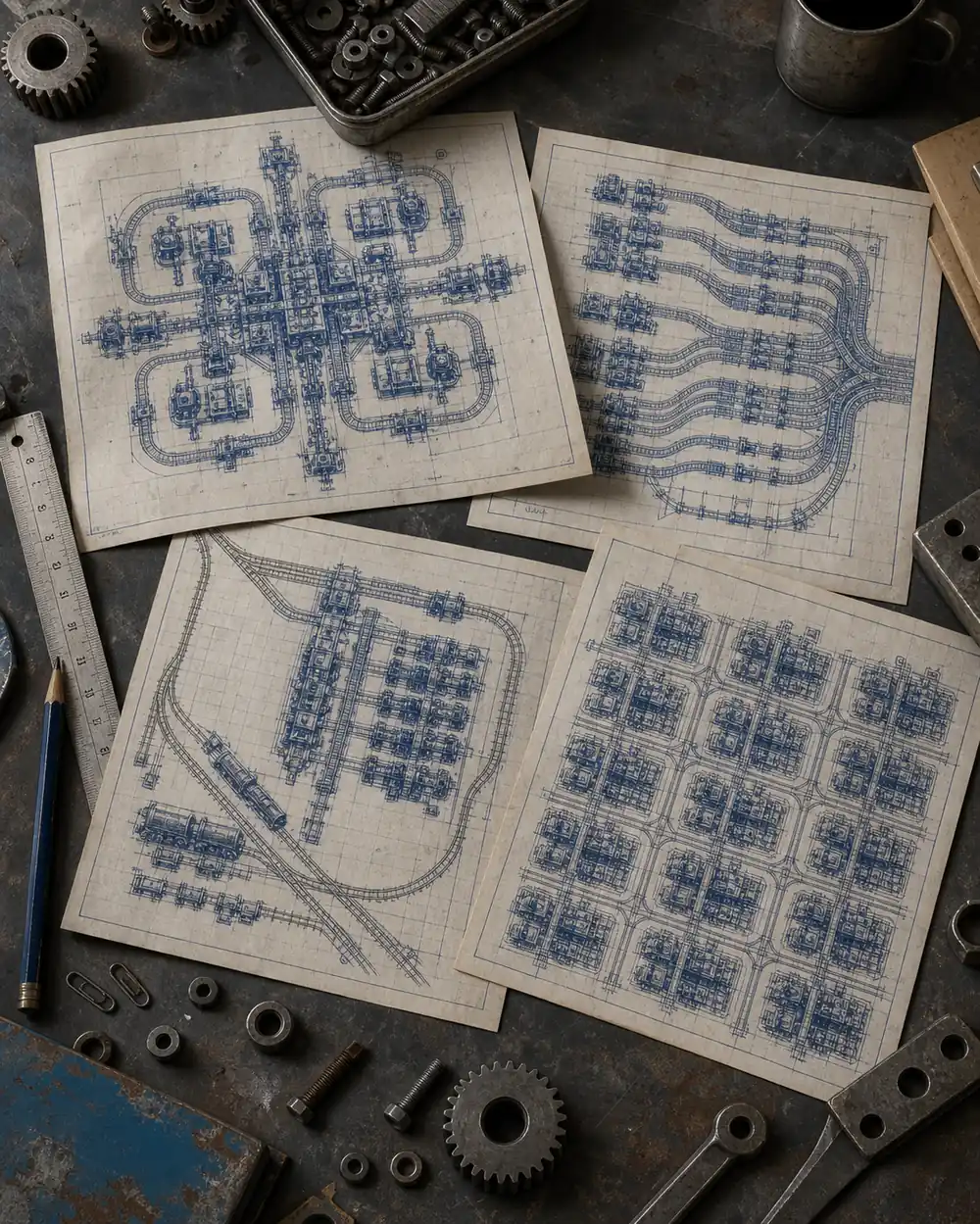
Match the Blueprint to the Space Age Location
A blueprint is not portable just because the game lets you paste it. Space Age recipes, terrain, power and logistics can change the meaning of an otherwise familiar layout.
Nauvis
Use Nauvis blueprints for stable starter production, general malls and rail standards. Leave clear interfaces for imports so a local block does not depend on a hidden belt or pipe from the other side of the base.
Vulcanus
Check foundries, lava-related recipes, big mining drills and local power before copying a smelting or module block. A Nauvis furnace row may be the wrong footprint even when the output item is familiar.
Fulgora
Recycling and scrap flows make buffers and priorities important. Inspect return belts, recycler feeds and overflow handling so a blueprint does not deadlock when one output backs up.
Gleba
Spoilage-sensitive production needs timing, freshness and controlled buffers. Test the block long enough to see what happens after a brief interruption; a full chest can hide a stale-input problem.
Aquilo and platforms
Cold power systems and orbital layouts need explicit fuel, heat, defense and transport checks. Use a small working slice before scaling a visually impressive platform or planet base.
How to Audit a Blueprint Before Importing It
Spend a minute reading the blueprint before spending an hour repairing it. The following sequence catches most problems without requiring a full rebuild.
Read the source context
Record the Factorio version, Space Age requirement, mods, intended planet, train length and output target. If these are missing, treat the design as an experiment rather than a standard.
Inspect the footprint
Count inputs and outputs, identify power poles and pipes, and look for hidden entities outside the obvious factory rectangle. Check whether the block is tileable and which edge is the input side.
Check dependencies
Look for machines, modules, recipes, signals, logistic conditions and quality settings that your save has not unlocked. Remove missing dependencies before a live paste.
Compare rates
Use the Factorio calculator or ratios guide to estimate the expected item flow. A blueprint that has enough assemblers but too few belts, inserters, wagons or power can still be throughput-limited.
Place one test copy
Build one block near a controlled supply. Run it empty, at normal load and during a delivery gap. Only then add it to the trusted book or stamp it repeatedly.
Test and Organize a Space Age Blueprint Book
The most reliable book is small enough to understand. Organize it around a build sequence and keep variants together so you can choose the correct design under pressure.
| Book section | Useful variants | Pass condition |
|---|---|---|
| Foundations | Straight rail, corners, power and roboport coverage | Tiles align without gaps and construction reach covers the full block |
| Production | Normal, beaconed, quality or planet-specific versions | Inputs, outputs and power match the selected recipe and target rate |
| Stations | Load, unload, stacker and depot layouts | The train fits, signals clear and station limits recover after a blocked stop |
| Platforms | Hull, fuel, asteroid and defense slices | The platform keeps moving, processes the intended cargo and has a recovery path |
| Recovery | Overflow, bypass, replacement and teardown blocks | A jam or missing ingredient can be isolated without deleting the whole network |
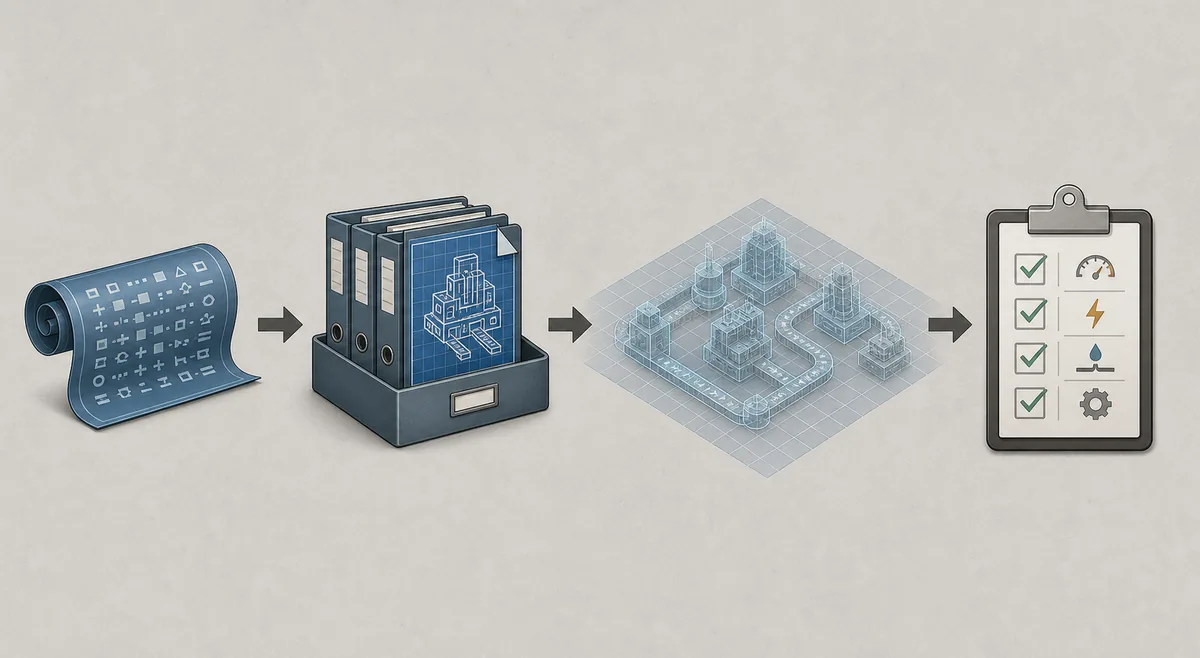
Common Space Age Blueprint Failure Modes
Most blueprint failures are interface failures, not bad-looking layouts. Diagnose the missing assumption before changing the whole design.
The recipe is wrong
An older or modded recipe can leave machines idle or produce the wrong intermediate. Re-select the current recipe and compare the target rate before adding more assemblers.
The block is starved
If the output looks correct but machines pause, inspect belt lanes, inserter stack size, pipe direction, station unloading and delivery cadence. Do not hide the shortage with a larger buffer first.
The rail works once
A junction can pass one train and still fail under traffic. Test the longest train, both directions, an occupied station and a waiting queue before using the same intersection across a network.
The planet assumption changed
Space Age blocks may depend on local power, spoilage, heating, recycling or a cargo route. Label those assumptions in the book so a future copy is not mistaken for a universal module.
Space Age Blueprint Checklist
Use this short checklist before a blueprint becomes part of a repeatable factory standard.
Scope
The name says what the block does, where it works and which Factorio or Space Age assumptions it needs.
Interfaces
Input and output edges are obvious, power and fluid connections are visible, and no hidden belt or pipe is required.
Capacity
Machine, belt, pipe, train, platform and power capacity are compatible with the target rate.
Stress test
One copy survives normal load, an empty start, a delivery pause and the relevant rail or spoilage edge case.
Book hygiene
The trusted version is labeled, duplicates are removed and an older variant is kept only when its use case is clear.
Validate the numbers before you stamp the design
Use the Factorio calculator for recipe and rate estimates, then apply the blueprint checklist to the physical layout, logistics and recovery behavior.
Factorio Space Age Blueprints FAQ
Do Factorio blueprints work in Space Age?
Many blueprints can be imported, but importability is not the same as compatibility. Check the Factorio version, recipes, machines, modules, mods, planet conditions and train assumptions before using a design in a live Space Age save.
Where should I use Space Age blueprint books?
Use separate books for Nauvis production, planet-specific chains, elevated rail, space platforms, stations and mall supply. This keeps each blueprint close to the inputs, outputs and failure modes it was designed for.
How do I test a blueprint before scaling it?
Place one copy near controlled inputs, inspect every connection, run it at normal load and simulate a delivery interruption. For rail designs, test the longest train and a busy queue; for Gleba designs, observe freshness over time.
Should I download a large Space Age blueprint book?
A large book can be a useful reference, but it is harder to audit. Start with a small subset, label variants by planet and train length, and add designs only after a test copy passes.
Can a blueprint include Space Age quality or spoilage settings?
The geometry can support those systems, but the production result depends on recipe, quality modules, recycling, freshness and buffers. Treat quality and spoilage as explicit assumptions and verify the output with current calculator settings.
Sources and Further Reading
Use these references to verify blueprint behavior, railway rules and Space Age systems while testing an imported design.